 EN
EN
Reliable Motion Feedback for Industrial Machine Control
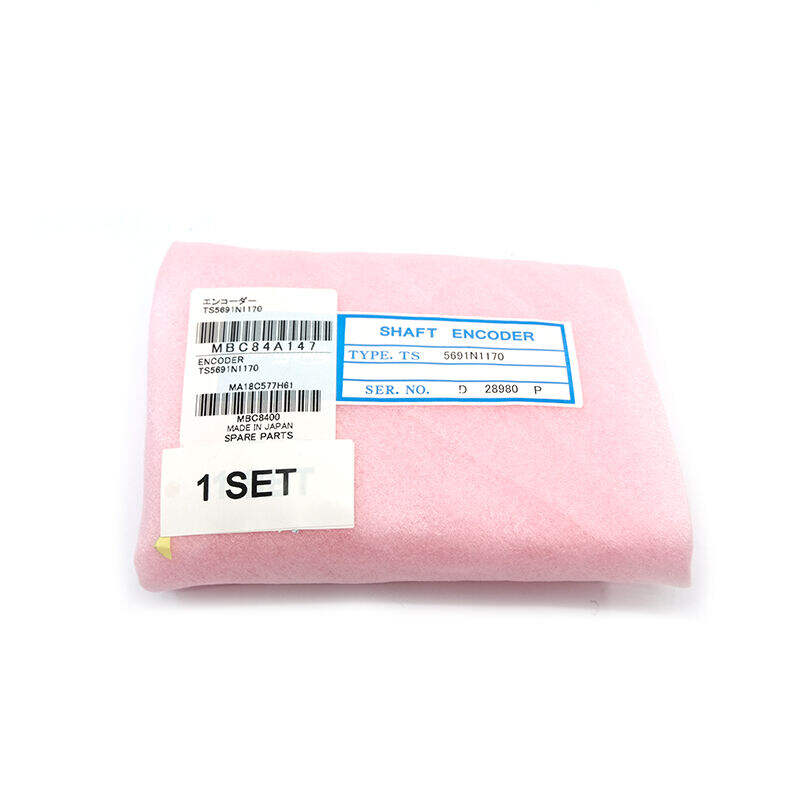
In modern machine systems, accurate motion feedback is the foundation of efficiency, safety, and repeatability. From automated production lines to heavy-duty equipment, rotary encoders play a critical role in translating mechanical movement into usable control data. As a key category within industrial encoders, rotary encoders help machines determine position, speed, direction, and rotation count with high precision. When industrial encoders are properly integrated, machines operate more smoothly, respond faster to control commands, and maintain stable performance even under demanding industrial conditions.
Core Functions of Rotary Encoders in Industrial Encoders Systems
Position detection and rotational accuracy
Rotary encoders within industrial encoders systems are primarily responsible for position detection. By converting rotational movement into electrical signals, they allow controllers to know exactly where a shaft or motor is located at any given time. This precise positional awareness is essential in applications such as CNC machines, packaging equipment, and automated assembly systems.
Industrial encoders enable machines to execute repeated movements with minimal deviation. When production processes rely on tight tolerances, accurate position feedback ensures that each cycle follows the same path. This reduces dimensional errors, improves product consistency, and minimizes material waste across long production runs.
Speed measurement and motion stability
Another essential function of industrial encoders is speed measurement. Rotary encoders generate signals proportional to rotational speed, allowing control systems to adjust motor output in real time. This capability helps maintain constant speed even when loads fluctuate, which is especially important in conveyors, mixers, and rotating machinery.
Stable speed control contributes directly to smoother operation. Industrial encoders prevent sudden acceleration or deceleration that could damage components or compromise safety. By maintaining balanced motion, machines experience less mechanical stress and longer service life.
Types of Rotary Encoders Used in Industrial Encoders Applications
Incremental rotary encoders in industrial systems
Incremental rotary encoders are widely used within industrial encoders applications due to their simplicity and responsiveness. They generate a series of pulses that represent relative movement, making them ideal for speed monitoring and distance measurement. Many industrial encoders in this category are favored for their cost efficiency and ease of integration.
In factory automation, incremental encoders are commonly installed on motors and drives. They provide fast feedback that allows systems to react quickly to changing conditions. Although they require a reference point after power loss, their performance remains highly reliable in continuous-operation environments.
Absolute rotary encoders for precise positioning
Absolute rotary encoders represent another important group of industrial encoders. Unlike incremental types, they provide a unique position value for every shaft angle. This means position data is retained even when power is removed, eliminating the need for homing routines on startup.
Industrial encoders with absolute functionality are essential in robotics, lifting systems, and multi-axis machinery. Immediate position awareness improves safety and reduces downtime, especially in applications where uncontrolled motion could cause damage or injury.
Performance Benefits of Using Industrial Encoders with Rotary Technology
Enhanced accuracy and repeatability
One of the most significant advantages of industrial encoders is the high level of accuracy they bring to machine control. Rotary encoders ensure that motors and actuators move exactly as intended. This precision supports repeatable performance, which is critical in mass production and precision machining.
When industrial encoders provide consistent feedback, control systems can make fine adjustments that keep processes within specified tolerances. Over time, this repeatability leads to improved quality control and fewer rejected products.
Improved machine efficiency and throughput
Industrial encoders help machines operate closer to optimal performance levels. With accurate feedback on speed and position, systems can reduce idle time, shorten cycle durations, and optimize motion paths. This directly increases throughput without sacrificing safety or reliability.
By enabling precise synchronization between multiple machine components, industrial encoders reduce bottlenecks. Production lines benefit from smoother transitions between stages, resulting in higher overall efficiency.
Durability and Reliability of Industrial Encoders in Harsh Environments
Resistance to industrial conditions
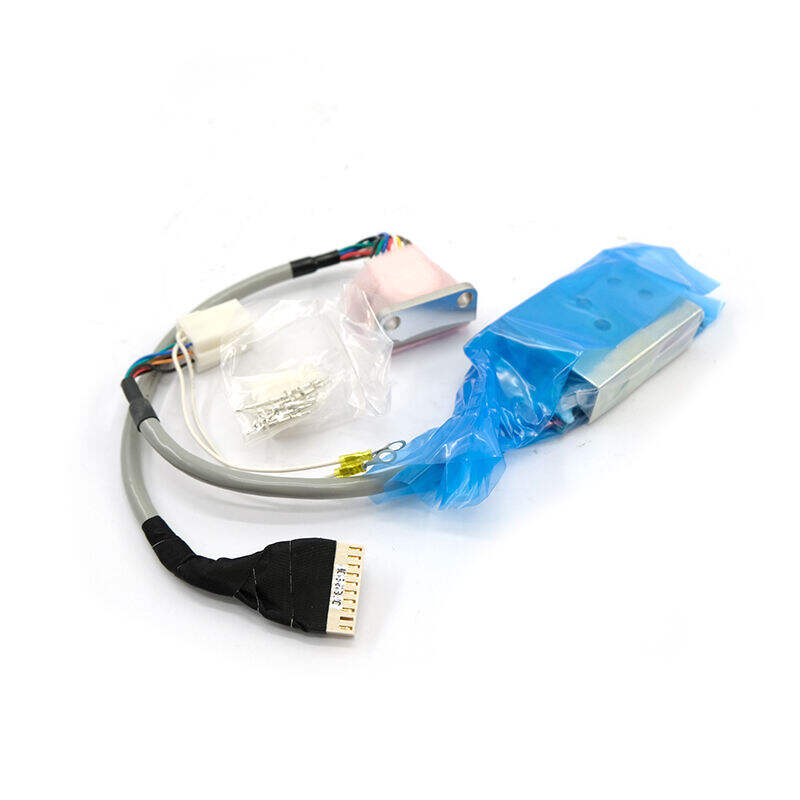
Industrial encoders are designed to withstand harsh operating environments. Many rotary encoders feature sealed housings that protect against dust, moisture, oil, and vibration. This rugged construction ensures stable signal output even in factories, mines, and outdoor installations.
Temperature tolerance is another key advantage. Industrial encoders can operate reliably across wide temperature ranges, making them suitable for both high-heat processes and cold storage facilities. This environmental resilience reduces the risk of unexpected failures.
Long operational lifespan and reduced maintenance
A major benefit of industrial encoders is their long service life. High-quality bearings, robust shafts, and precise internal components minimize wear over time. As a result, industrial encoders maintain accuracy and reliability through extended operating cycles.
Reduced maintenance requirements translate into lower operating costs. When machines rely on dependable encoder feedback, fewer shutdowns are needed for recalibration or replacement, supporting continuous production schedules.
Integration Flexibility of Industrial Encoders in Machine Design
Electrical compatibility with control systems
Industrial encoders support a wide range of electrical interfaces, making them compatible with modern control architectures. Rotary encoders can output signals such as quadrature, analog, SSI, and fieldbus-based communication formats. This flexibility allows seamless integration with PLCs, servo drives, and motion controllers.
By using standardized signal options, industrial encoders simplify system design and reduce engineering time. Control system upgrades can also be implemented more easily when encoders support common industrial protocols.
Mechanical adaptability across machine types
Mechanical adaptability is another strength of industrial encoders. Rotary encoders are available with different shaft sizes, hollow shaft designs, flange mounts, and coupling options. This variety allows industrial encoders to fit a wide range of machine layouts.
Whether installed on compact equipment or large industrial machinery, industrial encoders can be aligned and mounted efficiently. Standardized mounting solutions also reduce installation errors and improve long-term stability.
Safety and Control Advantages Enabled by Industrial Encoders
Support for controlled motion and safe operation
Industrial encoders play an essential role in safe machine operation. By providing accurate feedback, rotary encoders help control systems prevent over-speed, over-travel, and unintended motion. This is particularly important in lifting equipment, presses, and automated transport systems.
In safety-critical environments, industrial encoders contribute to controlled stopping and speed monitoring functions. Accurate motion data allows machines to respond predictably during emergency stops or fault conditions.
Improved process control and energy efficiency
Precise control enabled by industrial encoders improves overall process stability. Machines operate more smoothly, with fewer sudden load changes or oscillations. This stability reduces energy consumption and mechanical wear.
When motors receive accurate speed and position feedback, they can operate more efficiently. Industrial encoders help optimize power usage, which lowers operating costs and supports sustainable industrial practices.
Cost Efficiency and Long-Term Value of Industrial Encoders
Lower total cost of ownership
Although industrial encoders may represent a higher upfront investment compared to basic sensors, they often reduce total system costs over time. Improved reliability leads to fewer breakdowns, while precise control reduces scrap and rework.
By extending machine life and minimizing downtime, industrial encoders deliver strong long-term value. This makes them a cost-effective choice for both new installations and equipment retrofits.
Scalability for expanding industrial applications
Industrial encoders support scalable automation strategies. As production requirements grow, encoder-equipped systems can be expanded or upgraded without major redesigns. Rotary encoders provide consistent feedback that supports additional axes, higher speeds, or more complex motion profiles.
Standardizing on specific industrial encoders across multiple machines also simplifies inventory management and maintenance training. This scalability benefits organizations with diverse or growing automation needs.
Application Areas Where Industrial Encoders Excel
Manufacturing and automation equipment
Industrial encoders are widely used in manufacturing equipment such as CNC machines, packaging lines, and assembly systems. They ensure accurate positioning, synchronized motion, and reliable speed control throughout the production process.
Automation systems depend on industrial encoders to coordinate multiple components. Encoder feedback enables smooth operation and precise timing, which are essential for high-volume manufacturing environments.
Robotics, energy systems, and heavy machinery
In robotics, industrial encoders provide the precision needed for accurate joint movement and coordinated motion. Rotary encoders allow robots to perform complex tasks with consistency and reliability.
Energy systems, including wind turbines and power generation equipment, also rely on industrial encoders. They monitor rotational speed and position to ensure stable output and protect equipment from overload. Heavy machinery benefits similarly from encoder feedback that supports controlled operation under high loads.
FAQ
Key factors when selecting industrial encoders
Selecting industrial encoders involves evaluating accuracy requirements, environmental conditions, interface compatibility, and mechanical constraints. Matching encoder specifications to application needs ensures reliable performance and long-term stability.
Differences between incremental and absolute rotary encoders
Incremental rotary encoders provide relative motion data and require referencing after power loss. Absolute rotary encoders retain position information at all times, making them suitable for applications that require immediate position awareness.
Maintenance considerations for industrial encoders
Industrial encoders generally require minimal maintenance. Periodic inspection of mounting alignment, cabling, and environmental seals helps maintain consistent performance and extend service life.
Resolution impact on machine control
Higher-resolution industrial encoders deliver more detailed feedback, enabling finer motion control. Choosing appropriate resolution balances control accuracy with system processing capabilities.
Table of Contents
- Reliable Motion Feedback for Industrial Machine Control
- Core Functions of Rotary Encoders in Industrial Encoders Systems
- Types of Rotary Encoders Used in Industrial Encoders Applications
- Performance Benefits of Using Industrial Encoders with Rotary Technology
- Durability and Reliability of Industrial Encoders in Harsh Environments
- Integration Flexibility of Industrial Encoders in Machine Design
- Safety and Control Advantages Enabled by Industrial Encoders
- Cost Efficiency and Long-Term Value of Industrial Encoders
- Application Areas Where Industrial Encoders Excel
- FAQ