 EN
EN

Precision Feedback Solutions for Modern Industrial Systems
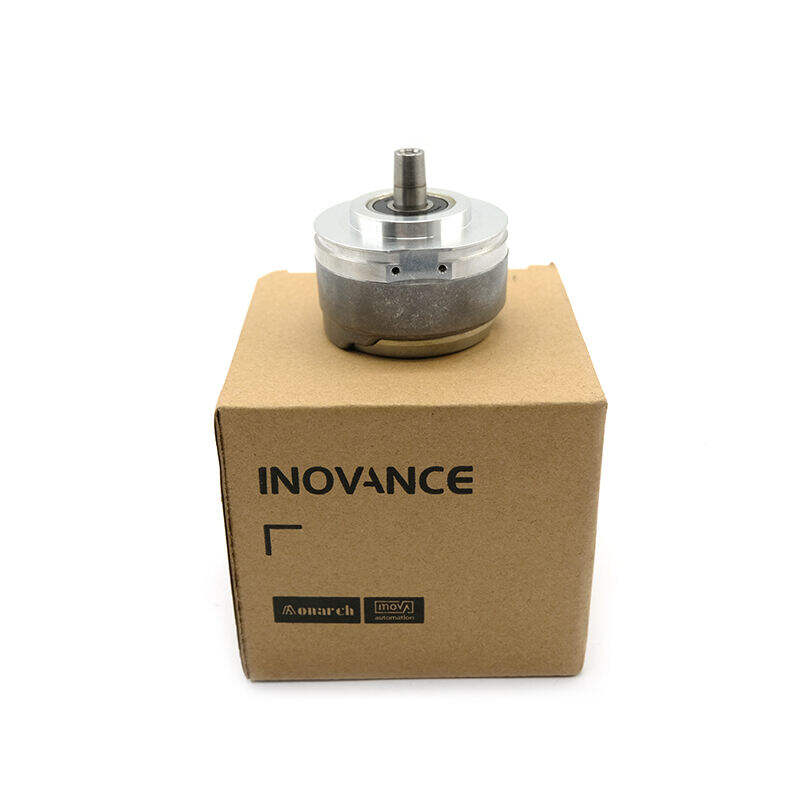
Industrial automation relies on accurate motion feedback to maintain stability, efficiency, and safety. In this environment, industrial encoders act as a core sensing component that translates mechanical movement into reliable electrical signals. These signals allow machines to determine position, speed, direction, and distance with a high level of precision. Across manufacturing lines, robotics, energy systems, and material handling equipment, industrial encoders support consistent control and repeatable performance. By integrating industrial encoders into automated systems, operators gain deeper visibility into machine behavior and stronger control over complex industrial processes.
Functional Role of Industrial Encoders in Automation Systems
Motion feedback and position accuracy
Industrial encoders are designed to provide precise motion feedback in real time. By converting rotary or linear movement into digital or analog signals, industrial encoders allow control systems to understand exact shaft position and movement changes. This feedback is essential for applications where even small positioning errors can lead to defects, downtime, or safety risks.
In automated production lines, industrial encoders help synchronize multiple axes of motion. When machines operate at high speed, accurate encoder feedback ensures alignment between motors, conveyors, and tooling. This level of accuracy improves product consistency while reducing waste caused by misalignment or timing errors.
Speed monitoring and directional control
Beyond position tracking, industrial encoders play a critical role in speed monitoring. Control systems rely on encoder signals to regulate motor speed and maintain stable operation under varying loads. Industrial encoders make it possible to detect acceleration, deceleration, and sudden changes in motion, allowing corrective actions to occur immediately.
Directional detection is another key function. By identifying rotation direction, industrial encoders help machines reverse, stop, or adjust movement safely. This capability is especially important in lifting equipment, automated storage systems, and packaging machinery where bidirectional motion is common.
Types of Industrial Encoders and Their Characteristics
Incremental industrial encoders in industrial environments
Incremental industrial encoders generate pulse signals that indicate movement relative to a reference point. These industrial encoders are widely used due to their simplicity, cost efficiency, and fast response time. In applications where continuous motion tracking is required, incremental encoders deliver reliable feedback for speed and distance measurement.
Many industrial environments favor incremental industrial encoders because they integrate easily with motor drives and PLC systems. They are commonly used in conveyor systems, printing equipment, and general automation machinery where absolute position recovery after power loss is not critical.
Absolute industrial encoders for position retention
Absolute industrial encoders provide a unique position value for each shaft location. Unlike incremental types, absolute industrial encoders retain position information even after power is removed. This makes them particularly valuable in applications where safety and positional accuracy must be preserved at all times.
In robotics, CNC machines, and heavy industrial equipment, absolute industrial encoders reduce the need for homing procedures. By delivering immediate position data on startup, these encoders improve system readiness and reduce operational delays.
Performance Advantages of Industrial Encoders
Improved system stability and repeatability
One of the main advantages of industrial encoders is their ability to improve system stability. Consistent feedback allows controllers to correct deviations quickly, preventing oscillation or drift. Industrial encoders support repeatable motion cycles, which is essential for high-precision manufacturing.
When machines repeat the same motion thousands of times per day, industrial encoders ensure each cycle follows the same path. This repeatability improves product quality and reduces variation, particularly in automated assembly and machining operations.
Enhanced productivity and reduced downtime
Industrial encoders contribute directly to higher productivity. Accurate motion data enables faster acceleration, smoother transitions, and optimized cycle times. As machines operate closer to their performance limits, encoder feedback helps maintain safe and controlled operation.
Downtime is also reduced because industrial encoders assist in early fault detection. Abnormal speed fluctuations or position errors can be identified quickly, allowing maintenance teams to address issues before major failures occur.
Industrial Encoder Durability and Environmental Adaptability
Resistance to harsh operating conditions
Industrial encoders are engineered to operate reliably in challenging environments. Many designs feature sealed housings that protect internal components from dust, moisture, oil, and chemical exposure. This durability ensures stable signal output even in factories, mines, and outdoor installations.
Temperature tolerance is another important factor. Industrial encoders can be specified to operate across wide temperature ranges, making them suitable for furnaces, cold storage facilities, and energy infrastructure where environmental conditions fluctuate.
Long service life and operational reliability
A key advantage of industrial encoders is their long service life. High-quality bearings, robust shafts, and secure mounting designs reduce mechanical wear over time. As a result, industrial encoders maintain consistent performance across extended operating periods.
Reliable encoders reduce the frequency of replacement and recalibration. This stability lowers maintenance costs and supports predictable equipment operation, which is critical for industries with continuous production schedules.
Integration Flexibility of Industrial Encoders
Compatibility with control systems and interfaces
Industrial encoders are designed to integrate with a wide range of control architectures. They support multiple output signals, including quadrature, SSI, CANopen, and other industrial communication protocols. This flexibility allows industrial encoders to connect seamlessly with PLCs, motion controllers, and servo drives.
By offering standardized electrical interfaces, industrial encoders simplify system design. Engineers can select encoder models that match existing infrastructure without extensive modifications or custom wiring.
Mechanical adaptability for diverse equipment
Mechanical compatibility is equally important. Industrial encoders are available in various shaft sizes, mounting styles, and housing configurations. Whether mounted directly on a motor shaft or connected through couplings, industrial encoders can adapt to different mechanical layouts.
This adaptability allows industrial encoders to be used across diverse equipment types, from compact machines to large-scale industrial systems. Standardized mounting options also reduce installation time and alignment complexity.
Safety and Control Benefits Enabled by Industrial Encoders
Support for functional safety systems
In many industrial applications, safety depends on accurate motion feedback. Industrial encoders provide essential data for safety-rated functions such as safe speed monitoring and controlled stopping. By delivering precise and reliable signals, industrial encoders support compliance with safety standards.
In lifting systems, presses, and automated guided vehicles, encoder feedback helps prevent overtravel and uncontrolled motion. This improves operator safety and protects equipment from damage.
Improved control accuracy in critical processes
Control accuracy is essential in processes where tolerances are tight. Industrial encoders enable fine motion control, allowing machines to execute complex movements smoothly. This level of control is particularly important in electronics manufacturing, medical device production, and precision machining.
Accurate encoder feedback also improves energy efficiency. Motors driven with precise speed and position data operate more efficiently, reducing power consumption and heat generation.
Cost Efficiency and Value of Industrial Encoders
Lower total cost of ownership
Although industrial encoders represent an initial investment, they often reduce total system costs over time. Improved reliability leads to fewer breakdowns, while precise control reduces scrap and rework. These factors contribute to a lower total cost of ownership.
By extending equipment lifespan and improving operational efficiency, industrial encoders deliver long-term economic value. This makes them a cost-effective component in both new installations and system upgrades.
Scalability for expanding automation needs
Industrial encoders support scalable automation strategies. As production demands grow, encoder-equipped systems can be expanded or upgraded without major redesigns. This scalability allows companies to adapt to changing requirements while protecting existing investments.
Standardized industrial encoder solutions also simplify inventory management. Using common encoder models across multiple machines reduces spare parts complexity and maintenance training requirements.
Application Coverage of Industrial Encoders
Manufacturing and material handling systems
In manufacturing, industrial encoders are used extensively in conveyors, packaging machines, and assembly lines. They ensure accurate positioning of products, synchronized motion between components, and smooth throughput.
Material handling systems rely on industrial encoders to control lifts, shuttles, and automated storage equipment. Encoder feedback ensures precise placement and retrieval, improving warehouse efficiency and accuracy.
Energy, robotics, and heavy equipment
Industrial encoders play a vital role in energy applications such as wind turbines and power generation systems. They monitor rotational speed and position, supporting stable energy output and equipment protection.
In robotics, industrial encoders enable precise joint movement and coordinated motion. Heavy equipment also benefits from encoder feedback, which supports safe and controlled operation under high loads.
Table of Contents
- Precision Feedback Solutions for Modern Industrial Systems
- Functional Role of Industrial Encoders in Automation Systems
- Types of Industrial Encoders and Their Characteristics
- Performance Advantages of Industrial Encoders
- Industrial Encoder Durability and Environmental Adaptability
- Integration Flexibility of Industrial Encoders
- Safety and Control Benefits Enabled by Industrial Encoders
- Cost Efficiency and Value of Industrial Encoders
- Application Coverage of Industrial Encoders